

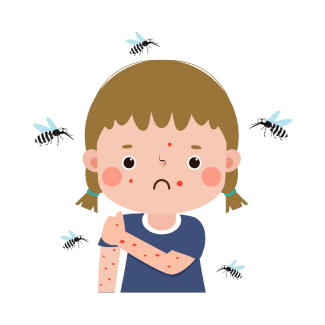
An insect sting (or bite) occurs when an insect uses its stinger or jaws to pierce the skin. Usually, the symptoms are limited to the local area (redness, itching). However, all stings can cause reactions ranging from mild (affecting only the skin) to severe allergic reactions—anaphylaxis (involving more than two systems: mucosal swelling, breathing difficulty, low blood pressure, vomiting)—depending on the type of insect and the body's response.
Common insects that cause stings:
- Mosquitoes – Cause itching and slight swelling.
- Wasps and bees – Can cause intense pain, swelling, and in some cases, an allergic reaction.
- Ticks – Attach to the skin and can transmit diseases.
- Fleas – Cause small, red, itchy bumps.
- Scorpions – Their sting can be painful or even dangerous.
Insect sting symptoms
- Mild reaction: Redness, pain, localized swelling, and itching.
- Allergic reaction: Severe swelling, shortness of breath, dizziness, vomiting, or anaphylaxis.
- Infection: If the area is not properly cleaned, an infection may occur with fever or pus.
Treatment:
- Cleaning: Wash the area with soap and water.
- Cold compresses: Apply ice to reduce swelling.
- Antihistamines: Can relieve itching; consult your pediatrician.
- Anti-inflammatory medication: For pain or swelling; consult your pediatrician.
- Stinger removal (e.g., from a bee): Use tweezers carefully.

Prevention
- Wear appropriate clothing (long sleeves, long pants)
- Avoid areas with standing water
- Use mosquito nets on strollers and screens on windows
- Insect repellents (for children under 12 months, follow your pediatrician's instructions for proper use)
When to see a doctor:
- In case of a severe allergic reaction
- If the swelling or redness spreads
- If fever or signs of infection appear